
Showing posts with label God Story. Show all posts
Showing posts with label God Story. Show all posts

राजबंशी समुदायको गुरुहरुको परीचय
राजबंशी समुदायको आफ्नै किसीमको
मौलीक रिती-रिवाज
र परम्पराहरु र
बिसेस किसिमको पहीचान
बोकेको समुदाय हो |राजबंशी
समुदायमा चाड-पर्व,बिहे-बारी,पुजा-पाठहरु
गर्ने तरिकाहरु आफ्नै
किसिमको छ र
यो समुदायको धार्मिक
कार्यहरु सम्पन्न गराउने धार्मिक
गुरुहरु पनी यसै
समुदायबाट हुन्छन जसलाई “गसै”
भनिन्छ | यो समुदायको
फरक-फरक किसीमको
धार्मिक कार्यहरु सम्पन्न गराउने
गुरु “गसै”हरु
फरक-फरक किसीमको
हुन्छन जुन बिसेस
धार्मिक कार्यहरुमा आवस्यक पर्दछ
|
१. गुरुगसै (कुल
गुरु )
२. पण्डित
३. किर्तनिया गसै
४. गाइनगसै
१. गुरुगसै (कुल
गुरु):----
What Is Chhath Puja?
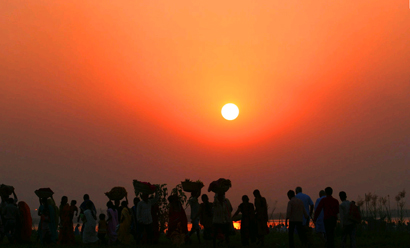 Chhath Puja is one of the most ancient Hindu festivals, ever surviving on earth.
Chhath Puja is referred to as the only
Vedic festival celebrated in India. If you want to know about the interesting
facts of Chhath Puja, read the article.
Chhath Puja is one of the most ancient Hindu festivals, ever surviving on earth.
Chhath Puja is referred to as the only
Vedic festival celebrated in India. If you want to know about the interesting
facts of Chhath Puja, read the article.
Chhath Puja is observed for a period of four days during the month of Kartika. Chhat
Puja ritual includes holy bathing, Vrat (fasts) and other holy severities. Chhath
Puja is dedicated to
Sun god, Surya. Devotees pay reverence to Lord Surya during Chhath Puja
by bowing before the Sun. This is done to invoke the blessings of the much powerful
Sun god. It is believed that Surya sustains life on earth. On Chhath Puja, Surya
is expressed gratitude and he is worshiped for the fulfillment of certain desires.
Chhath Puja is also known as Chhath Shashthi, Surya Shashti, Chhathi Maiya, and
Chhath Parv.
Do you want
to fill your life with positive energies? Yes, this is possible if you worship Lord
Surya, the ultimate source of energy, during Chhath Puja
Dashera (दशहरा – Dashara)


Shree Krishna Janmashtami
 Krishna Janmashtami is the celebration of the birth of Lord Shri Krishna,
the incarnation of Lord Vishnu, who is believed to have been born about
five thousand years ago in Mathura in 'Dwapar Yuga'. Krishna
Janmashtami is also known as Ashtami Rohini, Srikrishna Jayanti,
Krishnashtami, Saatam Aatham, Gokulashtami and sometimes simply as
Janmashtami. It is essentially a Hindu festival. The festival is
generally observed on Ashtami tithi, the eighth day of the dark half or
Krishna Paksha of the month of Bhadrapada in the Hindu calendar, when
the Rohini Nakshatra is ascendant. This is usually in the months of
August and September in the Gregorian calendar. The festival is
celebrated with great enthusiasm and vigor by Hindus all over India and
abroad. People observe fast the whole day, sing hymns and conduct
prayers at midnight to rejoice the birth of Lord. Ras lila, dramatic
enactments of the life of Krishna, are a special feature that is
showcased in every part of the country, as it re-creates the
flirtatious aspects of Krishna's youthful days. Another interesting
aspect of Krishna Janmashtami is the practice of Dahi-Handi. This game
portrays the playful and mischievous side of Krishna, where teams of
young men form human pyramids to reach a high-hanging pot of butter and
break it.
Krishna Janmashtami is the celebration of the birth of Lord Shri Krishna,
the incarnation of Lord Vishnu, who is believed to have been born about
five thousand years ago in Mathura in 'Dwapar Yuga'. Krishna
Janmashtami is also known as Ashtami Rohini, Srikrishna Jayanti,
Krishnashtami, Saatam Aatham, Gokulashtami and sometimes simply as
Janmashtami. It is essentially a Hindu festival. The festival is
generally observed on Ashtami tithi, the eighth day of the dark half or
Krishna Paksha of the month of Bhadrapada in the Hindu calendar, when
the Rohini Nakshatra is ascendant. This is usually in the months of
August and September in the Gregorian calendar. The festival is
celebrated with great enthusiasm and vigor by Hindus all over India and
abroad. People observe fast the whole day, sing hymns and conduct
prayers at midnight to rejoice the birth of Lord. Ras lila, dramatic
enactments of the life of Krishna, are a special feature that is
showcased in every part of the country, as it re-creates the
flirtatious aspects of Krishna's youthful days. Another interesting
aspect of Krishna Janmashtami is the practice of Dahi-Handi. This game
portrays the playful and mischievous side of Krishna, where teams of
young men form human pyramids to reach a high-hanging pot of butter and
break it. History of Ram Navami

Annually observed in the Hindu month of Chaitra,
Ram Navami is one of the holiest Hindu festivals that is observed in nearly
every part of the world inhabited by even the least number of Hindus. Explore
the interesting origin of Ram Navami with TheHolidaySpot and know how this
occassion got its roots. If you like reading about the History of Ram Navami, click here and pass this article on to your
friends. Have a happy Ram Navami celebration!
Every year, the month of March-April witnesses a flurry of activities in the pilgrimages and religious spots around India teeming with millions of Hindus with faith in their hearts and devotion in their minds. It is not something unnatural for the knower who is fully aware that the Hindu month of Chaitra is near and Ram Navami, one of the greatest holy Hindu occassions, is to be celebrated in 'Shukla paksha' or the waxing moon phase on the ninth day of the same.
Every year, the month of March-April witnesses a flurry of activities in the pilgrimages and religious spots around India teeming with millions of Hindus with faith in their hearts and devotion in their minds. It is not something unnatural for the knower who is fully aware that the Hindu month of Chaitra is near and Ram Navami, one of the greatest holy Hindu occassions, is to be celebrated in 'Shukla paksha' or the waxing moon phase on the ninth day of the same.
Sivaratri !!
 |
Sivaratri, dedicated to Lord Shiva, is celebrated on the moonless night of the month of Phalguna, which is the fourteenth day in the krishnapaksha or dark half. Owing to a special planetary conjunction, spiritual practices done on this day are considered to be especially auspicious and beneficial. There is a reference to this in one of the Puranas, where Shiva himself tells Parvati Devi [the Divine Mother] that this day is particularly dear to him, and that those who perform the prescribed austerities on this day will be freed from all sins.
|
Saraswati: Goddess of Knowledge & Arts
Saraswati, the goddess of knowledge and arts, represents
the free flow of wisdom and consciousness. She is the mother of the Vedas,
and chants to her, called the 'Saraswati Vandana' often begin and end Vedic
lessons.
Saraswati is the daughter of Lord Shiva and Goddess Durga. It is
believed that goddess Saraswati endows human beings with the powers of speech,
wisdom and learning. She has four hands representing four aspects of human
personality in learning: mind, intellect, alertness and ego. She has sacred
scriptures in one hand and a lotus – the symbol of true knowledge – in the
second.
 With her other two hands she plays the music of love and
life on a string instrument called the veena. She is dressed in white – the symbol of purity – and
rides on a white swan – symbolizing Sattwa Guna or
purity and discrimination. Saraswati is also a prominent figure in Buddhist
iconography - the consort of Manjushri.
With her other two hands she plays the music of love and
life on a string instrument called the veena. She is dressed in white – the symbol of purity – and
rides on a white swan – symbolizing Sattwa Guna or
purity and discrimination. Saraswati is also a prominent figure in Buddhist
iconography - the consort of Manjushri.
The learned and the erudite attach greater importance to
the worship of goddess Saraswati. As a practice, only educated people worship
her for knowledge and wisdom. They believe that only Saraswati can grant them
'moksha' - the final liberation of the soul.
Saraswati's birthday - Vasant Panchami - is
a Hindu festival celebrated every year on the 5th day of the bright fortnight
of the lunar month of Magha. Hindus celebrate this
festival with great fervor in temples, homes and educational institutes alike.
Raabniya Naach ( Lanka Naach)
 |
| Actor of Rabaniya Nach Posed in Character of Rawan |
This is a traditional drama played by peoples of Rajbanshi Community on
the occasion of Ram Nawami but sometimes the Lanka Naach is being called
to show in their village if they had promised God (as manti or vakal)
to do so if their prayers are answered. All the actors of drama play the
role of different characters of Ramayana- a holy epic of Hindus.
Hindu Holy Month For Fasting-Shravan Mass
The Month of Sravan and the Shravan Somvar Legend
 Shravan is the fifth month of Hindu calendar begining from Chaitra. This month is considered highly auspicious for praying to Lord Shiva. It is believed that worshiping Lord Shiva during Sawan is considered more powerful than worshiping during normal days. Many Hindus observe fasts and perform Pujas during the month, especially on Monday. The fasts done on Monday are known as Shravan Somwar Vrat. It is believed that by observing Sravan Somvar Vrat all desires gets fulfilled. It is believed that if unmarried women keep fast on Mondays of the month they would get a good husband. Apart from Monday’s women keep fasts on Tuesdays and Fridays of the month too. On Tuesdays newly
 51 Shakti Peethas of Ma Durga
 In Satya Yuga, Daksha performed a yagna with a desire of taking revenge on Lord Shiva. was angry because his daughter Sati had married Shiva against his wishes. Daksha invited all the deities to the yagna except for Shiva and Sati. The fact that she was not invited did not deter Sati from attending the yagna. But Sati, being an uninvited guest, was not given any respect. Furthermore, Daksha insulted Shiva. Sati was unable to bear her father’s insults toward her husband, so she committed suicide by jumping into the pyre. When Lord Shiva heard about her death he became furious. He went to the place where Daksha was performing his yagna and destroyed the area. Daksha was killed by Shiva’s ganas. Daksha
Lord Shiva then carried Sati’s body all over the world in a state of wild grief. At the request of all other gods, Lord Vishnu severed Sati’s body into 51 pieces with his Sudarshan Chakra, so that Lord Shiva could return to his sanity and once again take up his duties. Various parts of Sati’s body fell at different places which became known as Shakti Peethas. At all Shakti Peethas, the Goddess Shakti is accompanied by Lord Bhairava (a manifestation of Lord Shiva).
Subscribe to:
Posts (Atom)